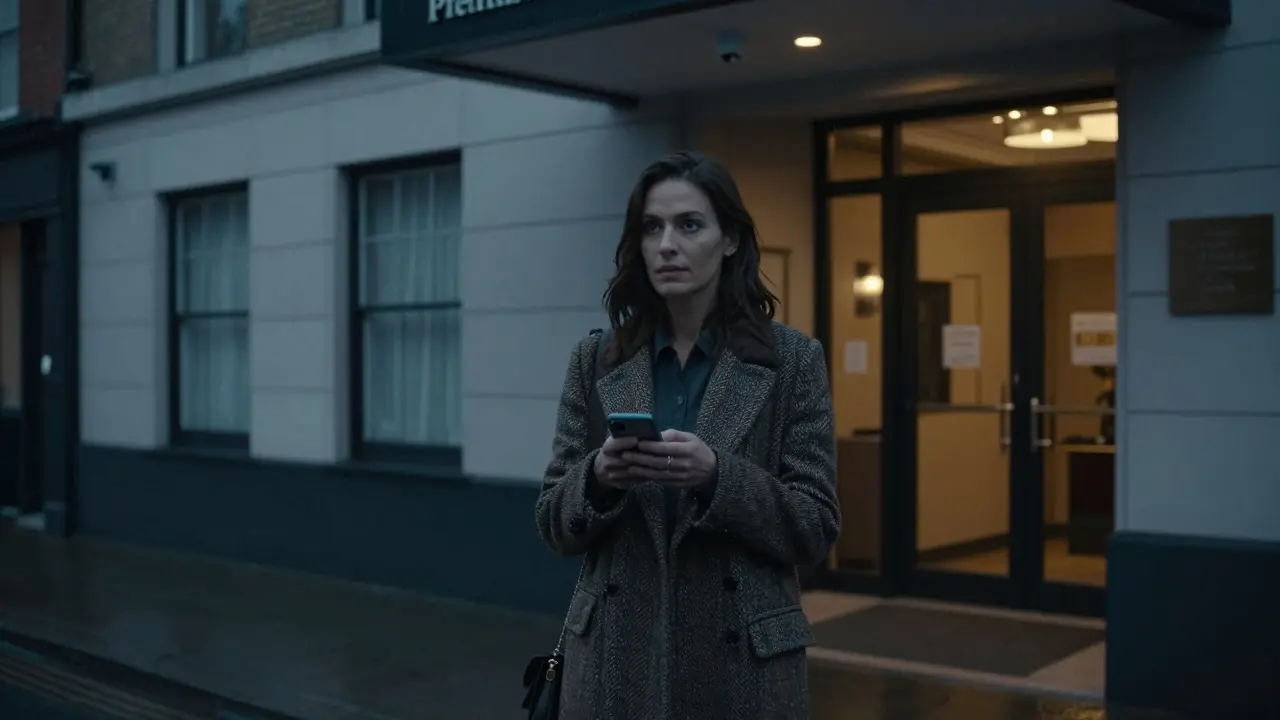
Working as an escort in London isn’t just about showing up and getting paid. It’s a high-stakes job where your safety, reputation, and mental health depend on the choices you make every day. Whether you’re new to the scene or looking to sharpen your edge, this guide cuts through the noise and gives you real, practical steps to protect yourself, avoid scams, and build a sustainable business - without sacrificing your dignity or peace of mind.
Know the Legal Landscape - It’s Not What You Think
Prostitution itself isn’t illegal in the UK, but almost everything around it is. Soliciting in a public place, running a brothel, or controlling someone else’s work are all criminal offenses. That means if you’re working independently, you’re legally in a gray zone - not breaking the law by selling time, but breaking it if you rent a flat for multiple clients or advertise openly.
Most successful escorts in London operate as private freelancers. They use discreet platforms, avoid public ads, and never work from home. The police don’t go after individuals unless there’s evidence of exploitation, trafficking, or organized crime. But they will shut down operations that look like brothels. So keep it simple: one client at a time, no shared spaces, no third parties.
Platforms like escort in London directories are common, but they’re not safe. Many are riddled with fake profiles, scams, and predators. Stick to vetted networks where clients are screened, reviews are verified, and communication happens through encrypted channels. If a site asks for your ID upfront or demands payment to join, walk away.
Screen Clients Like a Pro - Before You Even Say Hello
The biggest danger isn’t violence - it’s surprise. A client who seems polite at first can turn dangerous in minutes. Screening isn’t optional. It’s your first line of defense.
Start with the message. If they don’t mention your name, reference your profile, or ask specific questions, they’re likely a bot or a scammer. Real clients want to know your rates, availability, and boundaries. If they reply with vague phrases like “I’m looking for fun” or “Let’s chat,” flag it.
Always do a video call before meeting. Not for flirting - for verification. Check their face, voice, background. Are they in a hotel room? A dark alley? A car? If they refuse, cancel. No exceptions. Some escorts use apps like Signal or Telegram to share live location during the appointment. Others record a short audio clip of the client saying their full name and appointment time. That’s your evidence if something goes wrong.
Never meet at your place. Ever. Use a hotel room booked under a pseudonym. Choose one with 24/7 security, no direct elevator access, and a front desk that doesn’t ask questions. Chain hotels like Travelodge or Premier Inn are popular for a reason - they’re neutral, quiet, and don’t track guests beyond check-in.
Set Boundaries - And Enforce Them
Your limits aren’t negotiable. Not because you’re “difficult,” but because they’re your survival rules. Write them down. Print them. Keep them on your phone. If a client tries to push past them, end the meeting immediately - even if you’ve already been paid.
Common boundaries include: no drugs, no rough play, no anal without explicit consent, no filming, no outside visitors. If you say no to one thing, you say no to everything. Clients who respect boundaries stay. Those who don’t? They’re not worth your time or risk.
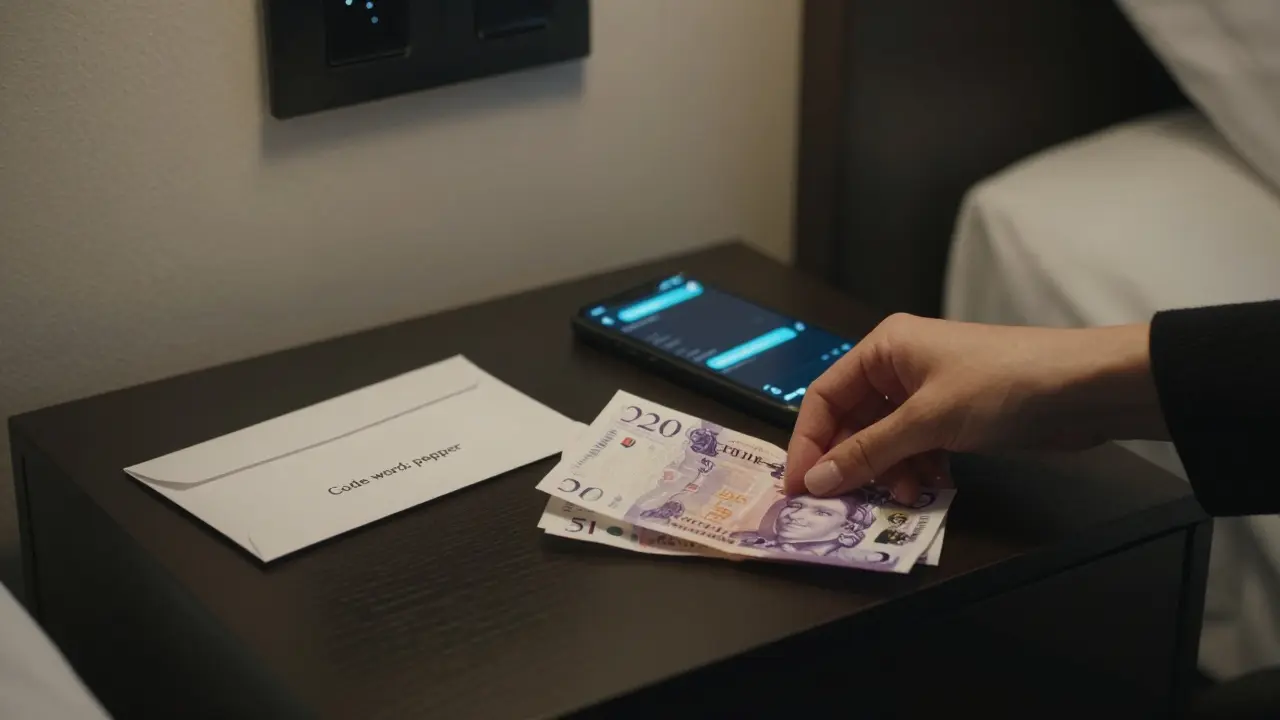
Some escorts use a “code word” system with a trusted friend. Say “pepper” means “I need help now.” That friend calls the police, texts the escort network, or shows up at the hotel with a fake complaint. It’s low-key, effective, and used by hundreds of professionals across the city.
Payment Is Non-Negotiable - And Always Upfront
Never accept payment after the fact. Not cash on delivery, not bank transfer after, not “I’ll Venmo you tomorrow.” If they’re not paying before you start, they’re not a client - they’re a risk.
Most escorts in London work with cash. It’s simple, traceable, and immediate. Keep small bills on you. Count it in front of them. If they try to pay with a large note and ask for change, refuse. They’re trying to distract you or test your awareness.
Some use encrypted payment apps like Revolut or Wise with pre-set limits. But never link these to your real identity. Use a separate phone number and bank account just for this work. Open a business account under a false name - it’s legal if you’re not claiming income for tax purposes. Many use limited companies registered under a pseudonym to receive payments cleanly.
If they insist on PayPal or bank transfer, walk away. These leave digital trails. And if something goes wrong, those trails point right to you.
Build a Support Network - You’re Not Alone
Working alone is isolating. And isolation is dangerous. The most successful escorts in London don’t work in a vacuum. They belong to networks - private Facebook groups, encrypted WhatsApp circles, or local meetups for sex workers.
These groups share warnings: “Watch out for guy in the red coat at the Hilton,” “Client with the BMW tried to record me,” “Don’t go to the Marriott on Oxford Street this week.” These aren’t rumors - they’re real-time intelligence. One warning saved a woman from being drugged in a Mayfair apartment last month.
Find your people. Not just for safety - for mental health. The stigma is heavy. You need to talk to someone who gets it. There are charities like English Collective of Prostitutes and UK Network of Sex Work Projects that offer free legal advice, therapy, and emergency housing. You don’t have to be a victim to use them. You just have to be human.

Protect Your Identity - Always
Your real name, address, social media, phone number - these are your weak spots. Don’t link them to your work. Use a burner phone. Get a PO box. Create a separate email with no personal info. Never post selfies with landmarks, license plates, or hotel signs. Even a blurred background can be traced.
Use a stage name. Not a cute one. A neutral one. Something that doesn’t sound like a fantasy. “Lily” or “Sophie” are common. Avoid anything that sounds like a pornstar name - it makes you look amateurish and easy to target.
Google yourself. If your real name comes up with your escort profile, clean it. Request removal from directories. Use tools like DeleteMe or OneRep to scrub your data. You’re not hiding - you’re protecting.
When Things Go Wrong - What to Do
Most escorts never face violence. But if it happens, your response matters. Don’t fight. Don’t scream. Don’t try to be brave. Your goal is to survive, not to win.
If a client becomes aggressive, stay calm. Say, “I’m leaving now.” Get up. Walk to the door. Don’t argue. Don’t beg. If they block you, use your code word. If you have a panic button app, trigger it. If you’re alone and scared, call 999. Say, “I’m in danger.” The police will respond. They don’t care about your job. They care that you’re alive.
Afterward, report it - even if you’re scared. Tell your network. File a report with the National Crime Agency’s Human Trafficking Unit. They track patterns. One report won’t change everything. But ten? That’s how they shut down predators.
It’s Not Just a Job - It’s a Business
The best escorts in London treat this like a business. They track income. They save for taxes (yes, you owe them). They invest in security, therapy, and self-care. They take weekends off. They say no to bad clients. They don’t hustle. They don’t beg. They set standards - and stick to them.
This isn’t about glamour. It’s about control. The more control you have over your environment, your clients, and your boundaries, the longer you’ll last - and the better you’ll feel.
There’s no magic formula. But there is a simple truth: safety isn’t luck. It’s a system. And if you build that system right, you don’t just survive in London’s escort scene - you thrive.
Is it legal to be an escort in London?
Yes, selling companionship is legal in the UK, but related activities like soliciting in public, running a brothel, or pimping are not. Most independent escorts work within the law by operating privately, avoiding public advertising, and never sharing spaces with others. The key is staying under the radar - not breaking rules, but avoiding gray areas that police target.
How do I screen clients safely?
Always require a video call before meeting. Check their face, voice, and surroundings. Avoid clients who refuse video, use vague language, or ask for personal details. Use encrypted apps like Signal to communicate. Never meet at your home. Always choose a hotel with security and no direct elevator access. Record a short audio clip of them stating their name and appointment time - it’s your legal protection.
Should I use cash or digital payments?
Cash is safest. Always get paid before the appointment. Never accept payment after. If you use digital payments, use encrypted apps like Revolut or Wise with a separate bank account under a pseudonym. Avoid PayPal, Venmo, or bank transfers - they leave digital trails that can be traced back to you. Never link your personal accounts to this work.
What should I do if a client becomes violent?
Don’t fight. Don’t argue. Say, “I’m leaving,” and walk to the door. If blocked, use your pre-arranged code word with a trusted friend. Call 999 immediately - say, “I’m in danger.” The police will respond. Afterward, report the incident to your escort network and the National Crime Agency. Your safety matters more than your reputation.
How can I protect my real identity?
Use a stage name, burner phone, and separate email. Never post photos with identifiable locations. Remove your real name from search results using data removal tools. Open a business bank account under a pseudonym. Avoid linking your social media, address, or phone number to your work. Your privacy isn’t optional - it’s your shield.